

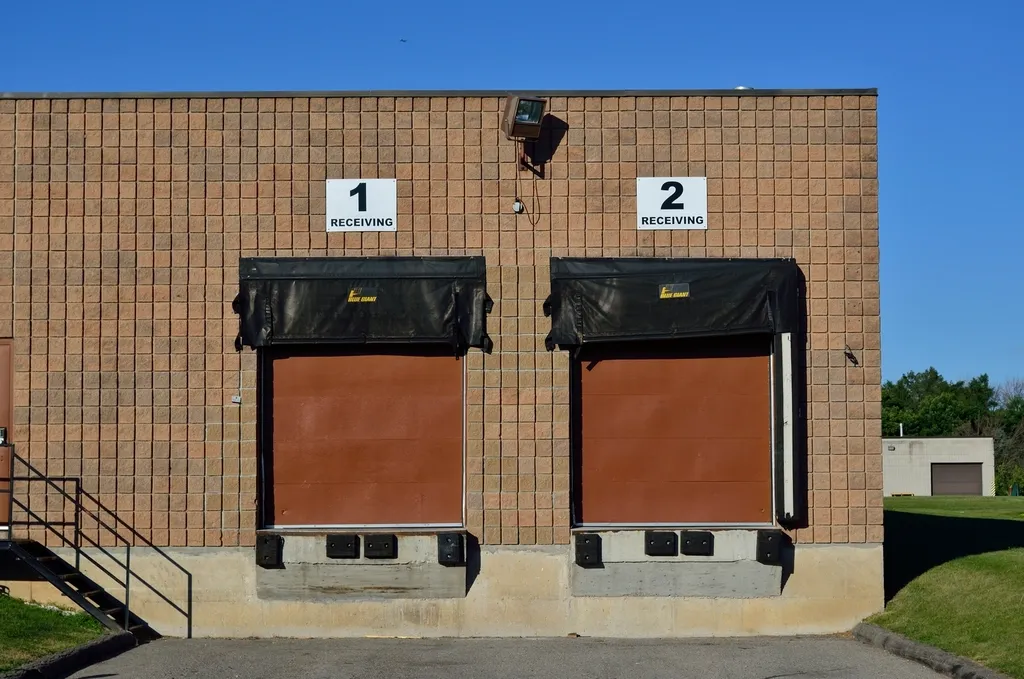
A carrier bills you 4.5 hours of detention at a Dallas cross-dock. The rate on the line matches your contract to the cent. Your team approves it, because the rate is the only thing anyone's actually in a position to check.
That approval is the problem, and it's how most teams handle freight detention charges. A detention charge is a claim that a truck waited at your facility longer than the contract allows, and that the wait was your doing. Whether it's valid is a question of evidence. A correct rate tells you nothing about whether the delay happened, how long it really ran, or whose fault it was.
The four claims inside every detention charge
Every detention charge asserts four separate things at once, and each one can fail on its own:
- The driver arrived at a particular time.
- The driver departed at a particular time.
- The gap between the two exceeded the free time your contract grants.
- The excess was your facility's doing and had nothing to do with the carrier.
Rate matching tests none of them. It confirms that if 4.5 billable hours occurred, the price for those hours is right. That conditional carries the entire weight of the charge, and nothing in a standard audit ever examines it.
It helps to read the four claims as a chain. If the arrival time is wrong, the dwell is wrong. If the free time is wrong, the billable window is wrong. And if the cause sits with the carrier, the rest doesn't matter, because the charge shouldn't be paid at all.
The money behind freight detention fees is far from trivial. A 2018 report from the U.S. Department of Transportation's Office of Inspector General estimated that detention reduces annual earnings for for-hire truck drivers by $1.1 billion to $1.3 billion. It also found that a 15-minute increase in average dwell time at a facility raises the expected crash rate by 6.2 percent. Detention is a real operational cost with real safety consequences, which is exactly why the charge should be proven before anyone assumes it.
Why Is Detention Documentation Different in Ocean and Road Freight?
Containerised freight went through this argument already and came out with a rule that makes the carrier show its detention fee calculation. The Federal Maritime Commission's Demurrage and Detention Billing Requirements took effect on May 28, 2024. They oblige carriers and marine terminal operators to put a specified set of data elements on every demurrage or detention invoice, and to issue it within 30 days. Leave a required element off and the billed party has no obligation to pay the charge at all.
Road detention has no equivalent. A motor carrier can bill you for dwell with a start time, an end time and nothing else, and the invoice is perfectly valid.
So whatever evidentiary standard applies to truck detention is the one you impose yourself, in your own audit, before the payment goes out. If you don't define what a valid line must show, the carrier's invoice defines it for you.
What Evidence Is Needed to Validate Detention Charges?
To verify freight detention charges, you work through the evidence in a fixed order, because each check depends on the one before it. You can't apply free time until you trust the timestamps.
Arrival and departure
Geofence crossings from your visibility provider give you both timestamps independently of the carrier's own record.
Where the two disagree by more than a few minutes, the disagreement is itself the finding. A driver who logged an arrival 40 minutes before the tractor entered the geofence has billed you for 40 minutes of interstate. If your shipment tracking and exception detection already records stop events, the trace you need for this check exists before the invoice arrives.
Free time
Free time is contractual, and it varies by lane, equipment type and facility.
Why the governing clause matters
Two hours is the common figure, but a drop trailer arrangement may grant none at all, because none is needed. Recomputing the billable window against the clause that actually governs the shipment, instead of a house default, is where a surprising share of detention quietly disappears.
Matching the charge to the right clause
To find the governing clause, you first need the charge itself identified consistently. Carriers describe the same wait under many different codes and free text strings, which is why normalising them comes first. We covered that mapping problem in how carriers bill the same detention under eight different codes.
Causality
This is the test almost nobody runs, and it's the one that decides the charge. A driver who shows up three hours outside the appointment window and then waits hasn't earned detention, because the wait follows from the late arrival. Neither has a driver who arrives without the paperwork the receiving dock requires, or with a trailer the facility can't work.
The clock ran in every one of those cases. You weren't the one who started it.
Appointment-driven receiving makes this test matter more. Where docks run to tight windows, as they often do for detention costs for food and beverage shippers, a late arrival pushes the truck into the next open slot, and the resulting wait shows up on your invoice as if your dock caused it.
Why Is Sampling Not Enough for Freight Invoice Audits?
Detention is individually small and collectively enormous, which is the worst possible shape for a sampled audit. Reviewing one invoice in eight will catch a duplicate or a rate error, because those are visible on the face of the document. It won't catch a causality failure. The evidence that would expose one lives in telemetry and appointment records the auditor never pulled.
So the charges that survive a traditional audit are the ones that look correct on paper. That's a selection effect, and passing it says little about whether the charges were earned.
Post-payment recovery has the same blind spot. It arrives months later, when the timestamps are cold and the carrier relationship makes a short pay expensive in ways the spreadsheet doesn't show.
What Penny checks before the invoice clears
For pre-payment freight invoice audit, Penny reviews every freight invoice before payment and doesn't sample after it. On a detention line she pulls the geofence trace and the trip stop record. She recomputes the billable window against the specific contract clause governing that lane and equipment. Then she asks the question the rate check skips entirely: is this delay attributable to us at all?
Where the charge holds up, it clears without anyone touching it. Where it doesn't, she drafts the dispute with the timestamps, the clause and the causality finding already attached. The carrier conversation opens with evidence.
In our own work on detention lines, the disputes that resolve fastest are the ones that arrive with the geofence times and the appointment record side by side. Carriers rarely argue with their own tractor's position.
| Check | Rate matching | Pre-payment audit |
|---|---|---|
| Price matches the contract | Yes | Yes |
| Arrival and departure verified independently | No | Geofence and trip stops |
| Free time applied per governing clause | House default | Per lane and equipment |
| Delay attributed to a cause | No | Yes |
| Coverage | Sample | Every line |
| Timing | After payment | Before payment |
Audit last month's detention yourself
You don't need a platform to run the first pass. Here's the order to work in:
- Take last month's approved detention charges and pull the geofence trace for each one.
- Compare billed dwell against observed dwell.
- For the delays that survive, check how many began with an arrival outside the appointment window.
- Recompute free time on what's left using the clause for that lane and equipment.
Most teams find the rates were fine all along. The gap sits in the hours nobody was ever in a position to question, on invoices that passed every check anyone thought to run.
Want to see that evidence chain run against your own detention lines? Book a walkthrough and we'll take you through it on last month's invoices.
Frequently asked questions
- How are detention charges calculated in trucking?
- Take the dwell between the driver's arrival and departure, subtract the free time your contract grants for that lane and equipment, and bill the excess hours at the contracted rate. Two hours of free time is common, but a drop trailer arrangement may grant none. A matching rate only confirms the price per hour. It doesn't confirm that the hours happened or that your facility caused them.
- What evidence is required for detention charges?
- You need arrival and departure times that don't come only from the carrier, such as geofence crossings or trip stop records from your visibility provider. You need the free time clause that actually governs the lane and equipment. And you need the appointment record, to show whether the driver arrived inside the window with the paperwork and a trailer the dock could work.
- How does free time affect freight detention fees?
- Free time comes off the dwell before any hour becomes billable, so applying the wrong clause changes the bill directly. It varies by lane, equipment type and facility. Recompute the billable window against the clause that governs the shipment, not a house default, because that's where a surprising share of detention disappears.
- When should a detention charge be disputed?
- Dispute it when observed dwell is shorter than billed dwell, when the free time applied doesn't match the governing clause, or when the delay started with a late arrival or a carrier-side problem. In those cases the clock may have run, but your facility didn't cause it. Send the timestamps, the clause and the causality finding with the dispute.
- Are road detention invoices regulated like ocean detention invoices?
- No. The Federal Maritime Commission's Demurrage and Detention Billing Requirements, effective May 28, 2024, set required data elements and a 30-day issuing window for ocean carriers and marine terminal operators. Road detention has no equivalent rule, so the evidence standard is whatever your own audit enforces.
See it on your freight
Stop Overpaying On Freight Invoices
Penny checks every invoice against your contracts and what the shipment actually did, then disputes what doesn’t hold up. You pay 30% of what she saves you, and nothing if she saves nothing.
Found this useful? Share it with your team.
Share on LinkedIn